Frozen or Burst Pipe? Warning Signs and What to Do
Frozen pipes often cause weak or absent water flow, while burst pipes can cause leaks, water damage, or sudden pressure loss. PlumbingMaplevalley.link can inspect the problem and provide frozen pipe repair, burst pipe repair, or emergency plumbing service.
Request an EstimateHow Can You Tell If a Pipe Is Frozen or Burst?
A frozen pipe usually restricts or stops water flow, while a burst pipe releases water or causes sudden pressure loss.
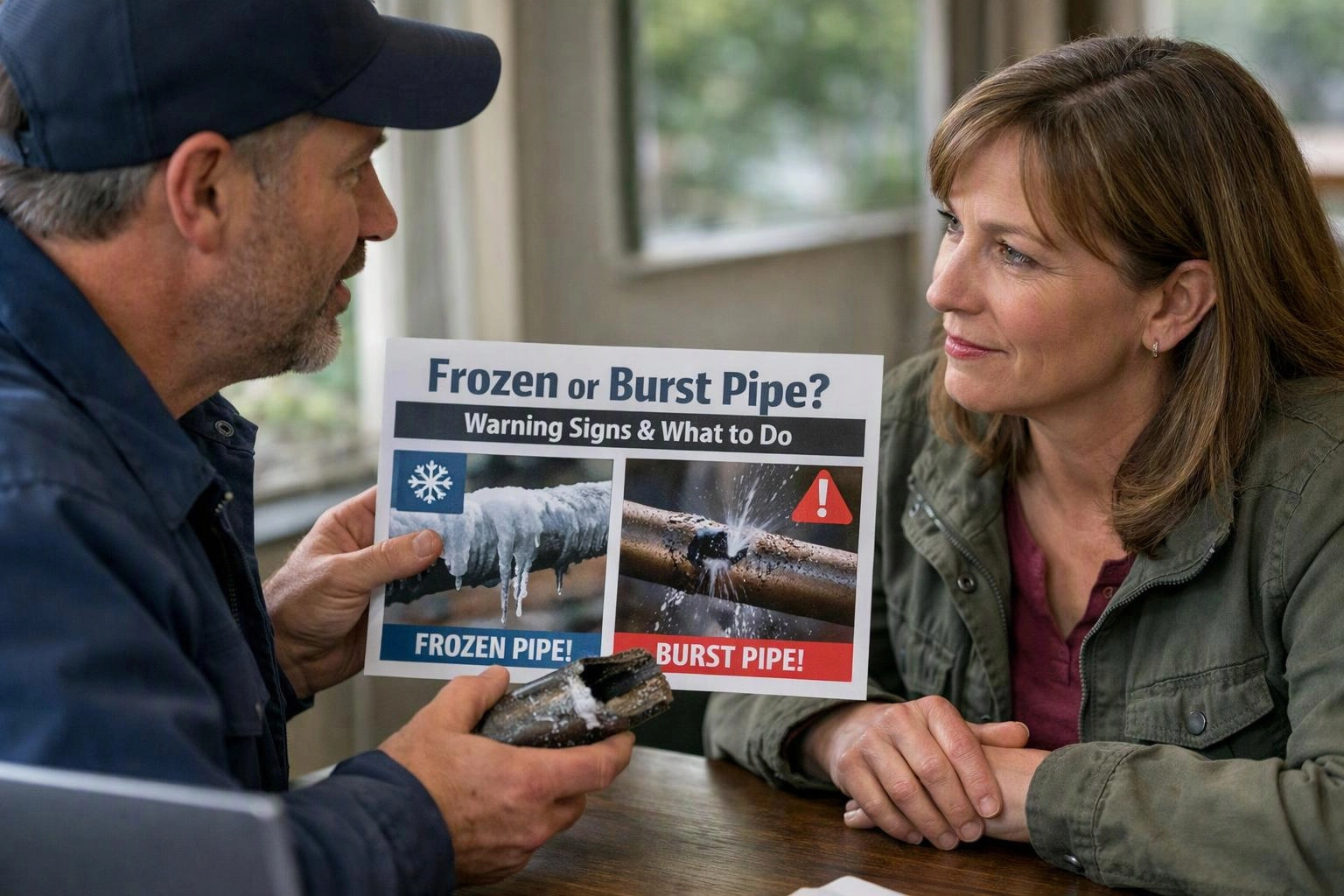
A frozen pipe can block the water supply inside the line. You may notice weak flow or no water from one fixture while other fixtures still work. Cold pipe pressure can build behind the blockage, especially when frozen water expands.
A burst pipe usually creates a visible leak, wet wall, ceiling stain, or puddle. A hidden break may cause low water pressure without an obvious water leak. We can trace the problem with a plumbing inspection and leak detection.
Our Frozen Pipe Repair service covers frozen water lines, cracked plumbing pipes, and related water damage concerns.
Warning Signs of a Frozen or Burst Pipe
Frozen pipe signs often begin with changes in water flow or cold pipe surfaces.
These symptoms can point to a frozen line, a broken pipe, or another water supply issue:
A single sign doesn't always show the full problem. We check the pipe, nearby valves, water pressure, and signs of hidden water damage.
Frozen Pipe Signs and Burst Pipe Signs Compared
Frozen pipe signs point to restricted flow and cold exposure, while burst pipe signs point to escaping water and active damage.
| Condition | Water pressure and flow | Pipe surface and leak location | Property damage risk |
|---|---|---|---|
| Frozen pipe | Flow becomes weak or stops. | Frost or cold exposure may appear. The blockage may be hidden. | Damage may develop if thawing reveals a crack. |
| Burst pipe | Pressure can drop suddenly, and water flow may become uncontrolled. | Water may escape at a joint, wall, ceiling, or exposed pipe. | Active water damage can spread through building materials. |
The safest choice depends on whether water is escaping and whether electrical hazards are nearby. Treat active leaking as urgent, even when the broken pipe isn't visible.
What Should You Do When a Pipe Bursts?
If a pipe bursts, shut off the nearest safe water valve, protect people from electrical hazards, limit water damage, and contact our team for burst pipe repair.
Use this checklist while keeping people away from unsafe areas:
Don't heat a hidden pipe with an open flame or disturb damaged electrical equipment. Safe access matters more than trying to stop every drop yourself.
What Causes Pipes to Freeze or Burst?
Frozen and burst pipes usually result from cold exposure, weakened materials, or pressure inside a blocked water line.
Cold weather often reveals an existing weakness instead of creating the only problem. We look for corrosion, failed joints, and damaged insulation during the inspection.
How Can You Prevent Frozen and Burst Pipes?
Pipe protection works best when insulation, indoor heat, and shutoff access are handled before cold weather.
Prevention doesn't replace an inspection when flow changes or a pipe swells. We can identify vulnerable lines before a water supply issue becomes property damage.
When Should You Call for Frozen Pipe Repair?
Call us for frozen pipe repair when water flow stops, a pipe shows frost or swelling, or thawing could expose a hidden crack.
A frozen pipe can look intact while pressure damages the pipe wall. Thawing can then release water into a wall, ceiling, cabinet, or floor.
Professional inspection is especially important for a hidden pipe, cracked pipe, or line near electrical equipment. We can assess the water restoration risk and recommend safe repair steps.
How We Check and Repair Frozen or Burst Pipes
We use pipe inspection, leak detection, water shutoff checks, and targeted repair to find the source and protect the water supply.
Our team first reviews the symptoms and checks accessible valves, pipe joints, pressure changes, and visible damage. We then trace hidden leaks when the break isn't easy to see.
Repair may involve thawing a safe accessible section, sealing a damaged joint, or completing pipe replacement. We choose the repair scope based on the pipe material, damage, access, and risk of another leak.
Emergency plumbing repair may be needed when water is actively escaping or damage is spreading. We also check that the water shutoff works and that the repaired line is safe to use.
What Changes the Cost of Frozen or Burst Pipe Repair?
Repair cost depends on the pipe location, damage, access, materials, and related water damage; we review those conditions before providing a quote.
Pipe location can affect how much access work the repair requires. A visible pipe joint is usually simpler to reach than a hidden wall leak or buried water line.
Pipe material, pipe corrosion, leak severity, and the need for pipe replacement also shape the repair scope. Water damage may require separate drying or restoration work beyond the plumbing repair.
We explain what we found, which repairs are needed, and what the quote includes. To request an exact quote, contact our team with the fixture symptoms and any visible leak details.
Questions About Frozen and Burst Pipes
Can a frozen pipe burst after it starts thawing?
Yes, a frozen pipe can burst during thawing when pressure reaches a weakened section or crack. Water may then enter a wall, ceiling, cabinet, or floor.
Can a frozen pipe cause low water pressure?
Yes, a frozen pipe can cause low water pressure by restricting water flow through the line. Pressure can also fall when the pipe cracks and water escapes.
Is water damage from a burst pipe an emergency?
Yes, water damage from a burst pipe is an emergency when water is actively escaping or reaching walls, floors, belongings, or electrical equipment. Shut off the safe water valve and contact our team for emergency plumbing repair.
Where is the main water shutoff for a burst pipe?
The main water shutoff is often near the water line entry point, meter, utility area, or mechanical room. If the valve isn't easy to identify or reach safely, our team can locate and check it during the plumbing inspection.
Related Resources
What a Plumber Can Help With: Common Services and When to Call
Compared ToEmergency Plumber vs. Standard Appointment: What to Compare Before You Book
Brand vs BrandEmergency Plumbing Companies Worth Comparing in Maple Valley (2026)
Brand vs BrandPlumbingMaplevalley.link vs Local Emergency Plumbing Alternatives in Maple Valley: Side-by-Side Comparison