Water Heater Warning Signs You Shouldn’t Ignore
Water heater problems often appear as lost hot water, strange noises, leaks, rusty water, or unstable temperatures. PlumbingMaplevalley.link explains what each warning sign can mean and when our team should inspect, repair, or replace the unit.
Request an EstimateWhat Water Heater Problems Should You Watch For?
Water heater problems can show up as missing hot water, unusual sounds, visible leaks, rusty water, or changing temperatures. These warning signs can point to repair, safety, performance, or replacement problems.
Watch the hot water supply and the area around the tank. A tank leak, pressure relief valve discharge, or sudden temperature change deserves attention.
No Hot Water or Less Hot Water
No hot water usually means the water heater isn't heating correctly or isn't receiving power or fuel. An electric water heater may have a failed heating element, thermostat, or circuit breaker issue.
A gas water heater may have a burner or pilot light problem. Our team checks the controls and heating parts before recommending water heater repair or replacement.
Popping or Rumbling Noises
Popping noise and rumbling noise often come from sediment buildup inside the tank. Sediment can settle around the heating element and make the tank work harder.
Our team checks the tank and heating element to identify the source. Repeated noise can signal a water heater issue that needs service before other symptoms appear.
Water Around the Base
Water around the base can mean a water leak, loose water connection, faulty drain valve, or overflow. Water from the tank itself may indicate tank corrosion.
Turn off the water shutoff if you can do so safely, and keep people away from hot water. Our team can locate the leak and check whether the tank remains serviceable.
Rusty or Discolored Hot Water
Rusty water or discolored water can come from a worn anode rod, tank corrosion, or corrosion in the hot water pipes. Rust that appears only with hot water points more strongly toward the water heater.
Our team checks the anode rod, tank condition, and nearby piping. We then explain whether water heater repair or replacement fits the condition we find.
Water That Changes Temperature
Inconsistent water temperature can result from a failing thermostat, heating element, or mixing valve. Changes in hot water demand can also make the supply feel unstable.
Our team checks the temperature controls and related components. We also consider how the water heating system responds during normal household use.
What Should You Do When a Water Heater Shows These Signs?
Stop using a leaking, smoking, or gas-smelling water heater and contact PlumbingMaplevalley.link for a safe inspection. A gas smell requires leaving the area and avoiding flames, switches, and other ignition sources.
Use the gas shutoff or water shutoff only when you can do so safely. Electrical safety also matters, so don't open panels or handle wiring around water.
Our team provides water heater inspection, water heater repair, and water heater replacement based on the unit's condition. We explain the safety concern and the next practical step.
Which Water Heater Checks Can You Do Yourself?
You can make safe visual checks, but PlumbingMaplevalley.link should handle gas, electrical, tank, and internal component work. Look for visible clues without removing covers or testing live parts.
Stop the check if you notice a gas smell, exposed wiring, smoke, or rapidly spreading water. Share those details with our team so we can plan a safe inspection.
| Factor | What you can do yourself | What we do |
|---|---|---|
| Homeowner inspection | Look for water, rust, unusual sounds, and visible damage. | We trace the symptom and inspect the water heater safely. |
| Temperature setting | Note the setting and describe temperature changes. | We test the thermostat, heating parts, and mixing valve. |
| Visible connections | Look for drips around accessible water connections. | We check connections, the drain valve, and the pressure relief valve. |
| Gas smell or electrical hazard | Leave the area and avoid flames, switches, and exposed wiring. | We assess the safety risk and handle regulated work. |
How We Diagnose Water Heater Problems
Our team checks the water heater's symptoms, controls, connections, safety parts, and tank condition before recommending repair or replacement. We begin with the complaint and then follow the evidence.
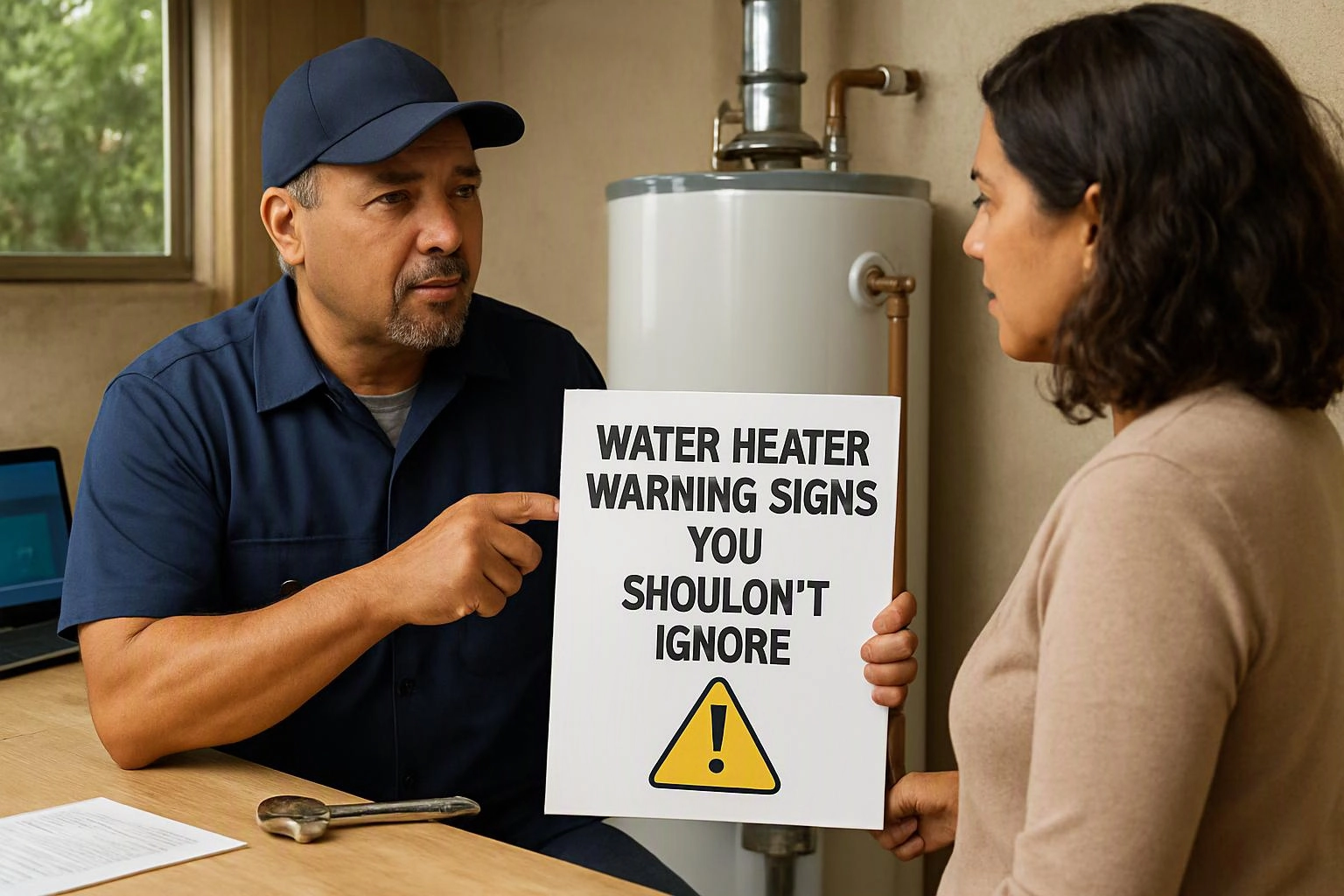
We inspect the heating element or burner assembly, thermostat, pressure relief valve, and water connections. We also look for corrosion inside or around the tank.
Our findings help us explain the repair path clearly. They also show when a water heater installation is the safer long-term choice.
When Does a Water Heater Need Repair or Replacement?
Water heater repair fits a serviceable failed part, while replacement fits a leaking or badly corroded tank and other major failures. The unit's condition guides that decision.
A failed thermostat, heating element, burner, or valve may support repair when the tank remains sound. A replacement water heater may make more sense when corrosion affects the tank or several major parts have failed.
Our team considers energy use, fuel type, unit condition, and installation requirements. We explain how each option affects the home plumbing system.
What Changes the Cost of Fixing a Water Heater Problem?
The cost depends on the failed part, unit condition, fuel type, access, and whether repair or replacement is needed. Installation requirements and the replacement model also affect the quote.
Our quote explains the work included, the component involved, and the recommended path. We can provide an exact quote after inspecting the water heater and its connections.
How to Get Help With a Water Heater Warning Sign
Contact PlumbingMaplevalley.link with the symptom, visible damage, and water heater type so our team can arrange the right inspection. Details about noise, leaks, temperature, or rusty water help us prepare.
When you need water heater repair, our team checks the unit before recommending work. We also provide water heater installation when replacement is the right option.
Use our contact page to request help and a quote.
Get a Free EstimateQuestions About Water Heater Warning Signs
Can a water heater stop working without leaking?
Yes, a water heater can stop producing hot water without a visible leak. A failed heating element, burner, thermostat, pilot light, or circuit breaker can interrupt heating.
Is rusty hot water always caused by the water heater?
No, rusty hot water can also come from corrosion in the hot water pipes. Our team checks the anode rod, tank, and piping to locate the source.
Can sediment buildup damage a water heater?
Yes, sediment buildup can interfere with heating and create popping or rumbling sounds. Our team checks the tank and heating parts when sediment is suspected.
Should I turn off a water heater that is leaking?
Yes, turn off the water supply when you can do so safely, and avoid touching electrical parts near water. Contact our team for a safe inspection of the leak and tank.
What does water near the pressure relief valve mean?
Water near the pressure relief valve can mean the valve is discharging or the connection is leaking. Our team checks the valve and related safety conditions before recommending repair.