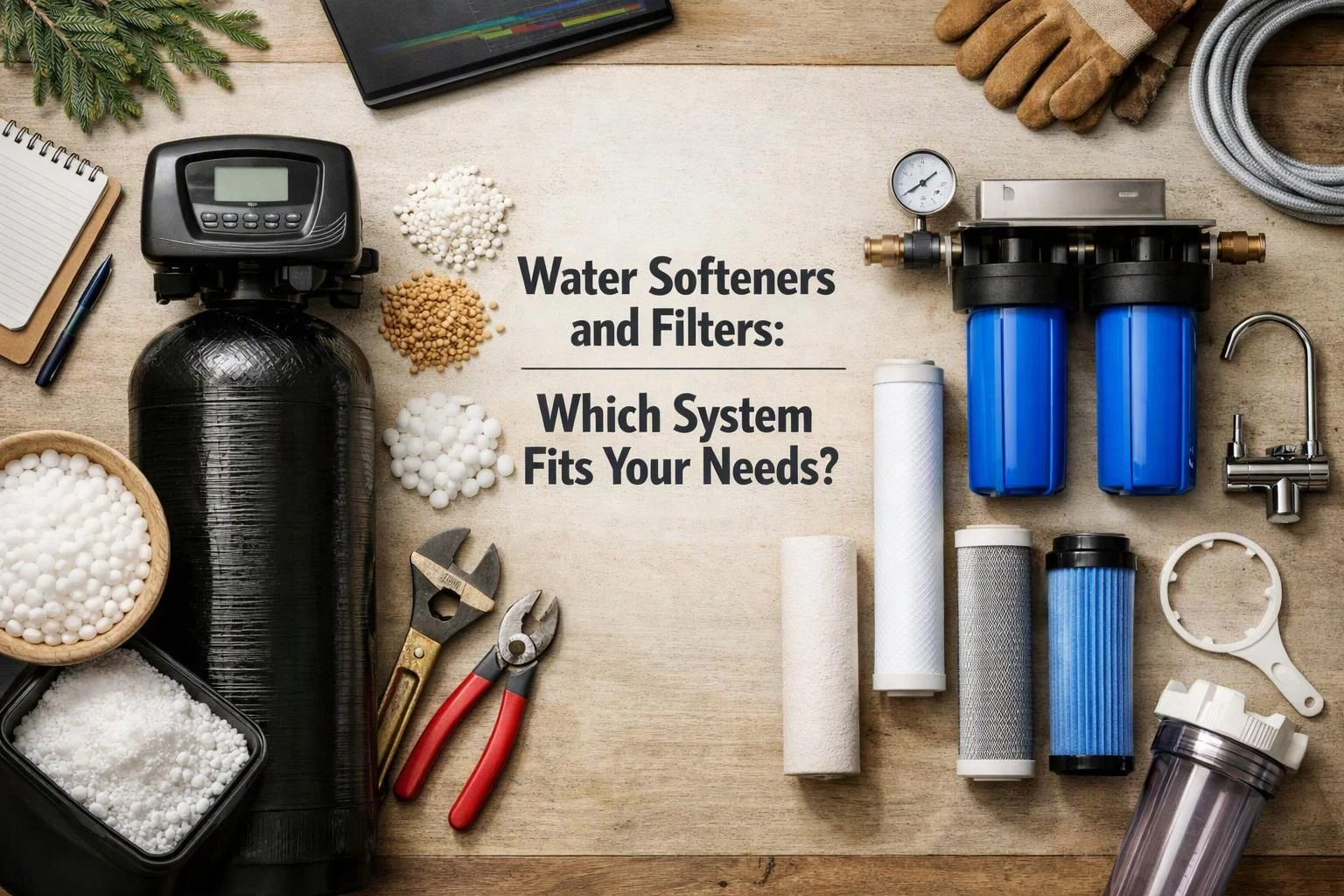
Water Softeners and Filters: Which System Fits Your Needs?
A water softener reduces hardness minerals, while a water filter targets specific impurities or particles. At PlumbingMaplevalley.link, we can help match testing results and water concerns to filtration system installation, softener installation, or both.
Request an EstimateWater Softener vs Water Filter: What Each System Does
A water softener treats hard water, while a water filter targets selected particles or contaminants. The right choice depends on the water problem you want to solve.
We review the symptoms, water source, and treatment goals before recommending residential plumbing equipment.
| System | Main purpose | What it may address | What it doesn't replace |
|---|---|---|---|
| Water softener | Reduces hardness minerals | Mineral scale, scale buildup, and soap residue | A complete drinking-water filter |
| Water filter | Reduces selected particles or contaminants | Sediment, taste, odor, or targeted water quality concerns | A solution for water hardness unless designed for that purpose |
Which System Fits Your Water Problem?
A water softener fits hardness problems, while a water filter fits targeted particles, tastes, odors, or contaminants.
Hard water can leave mineral scale on fixtures and create soap residue. A salt-based softener uses a resin tank to reduce the minerals that cause those effects.
Sediment may call for a sediment filter, while taste and odor concerns may call for a carbon filter. We use water quality information to connect the system to the actual concern.
Does a Water Softener Filter Drinking Water?
No, a water softener is designed to treat hardness, not to provide complete drinking-water filtration.
A softener can be installed as point-of-entry treatment for water entering the home. A point-of-use filter can then treat drinking water at a kitchen faucet or another selected location.
We check the treatment goal before pairing a resin tank with a drinking-water filter.
When Does a Home Need Both Systems?
Combined water treatment fits homes with separate hardness and water quality concerns. Each system handles a different part of the treatment plan.
We may recommend both systems in these situations:
Should You Test Your Water Before Choosing a System?
Yes, water testing helps connect the treatment system to the actual water problem instead of guessing.
Water testing can show whether hardness is present and whether sediment or other contaminants need attention. The water source also helps guide the testing plan.
We use hardness testing, contaminant testing, and your treatment goals to narrow the system choice. This approach helps prevent a filter from being selected for a problem it cannot address.
How Water Filters and Softeners Work Together
Water filters and softeners work together when each unit has a clear role in the treatment sequence. The order depends on the water test results and the equipment selected.
Our team checks the control valve, filter housing, bypass valve, brine tank, and drain connection during planning. We also explain maintenance needs before we prepare the quote scope.
What Should You Check Before Installation?
Water test results should guide installation planning, along with household water use and available plumbing space.
We review the main water line, installation space, drain connection, and plumbing compatibility. These factors help determine whether the system can serve the home as intended.
Maintenance needs also matter. Filter cartridges need replacement, and some softeners need salt, regeneration, or control adjustments.
For regulated plumbing work, our team checks the connection, shutoff points, drainage, and applicable inspection criteria. Hire PlumbingMaplevalley.link for the installation when the work involves changes to the home's plumbing system.
How We Match the Treatment System to Your Home
We match the treatment system to your water test results, household needs, and plumbing layout.
Our team can help you compare the treatment purpose of each system before work begins. See our Water Filtration System Installation service for help with whole-house or drinking-water filtration needs.
Questions About Water Softeners and Filters
Can a water filter remove hard water?
A water filter removes hard water only when it is specifically designed to reduce hardness minerals. Many filters target sediment, taste, odor, or other contaminants instead.
Will a water softener improve water taste?
A water softener may change water characteristics, but it isn't a complete taste treatment. A carbon filter may better fit chlorine taste or odor concerns.
What type of water filter works with a water softener?
A pre-filter, carbon filter, or drinking-water filter may work with a softener, depending on the test results and treatment goal. Our team checks the sequence and plumbing connections before selecting equipment.
Where should a whole-house water filter be installed?
A whole-house water filter is usually installed on the main water line so treated water can enter the home. Our team confirms the best location after checking space, access, pressure, drainage, and plumbing compatibility.
Contact our team to review your water concerns and request a treatment-system quote.
Contact our team Get a Free Estimate