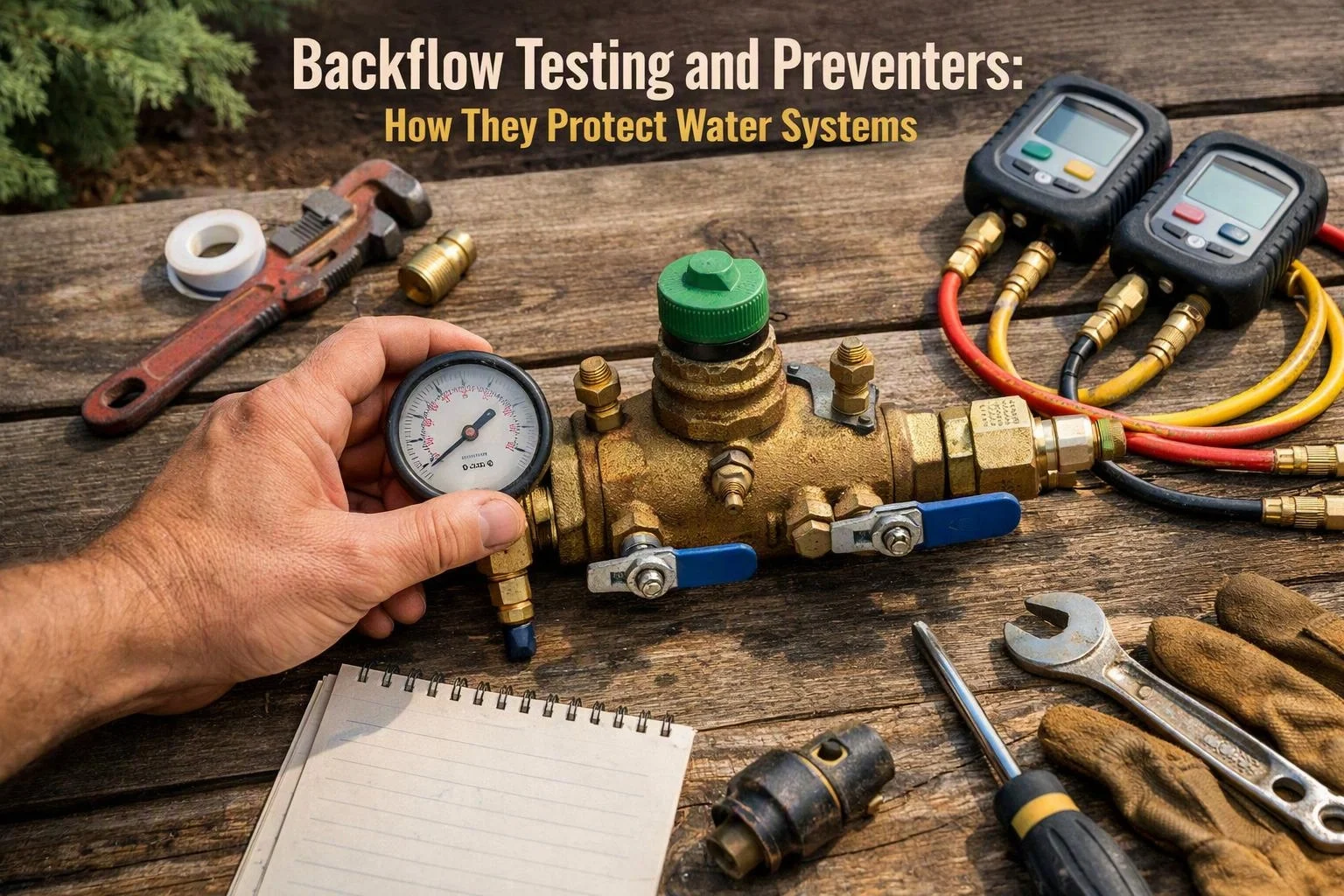
Backflow Testing and Preventers: How They Protect Water Systems
Backflow preventers stop polluted or unsafe water from reversing into clean water lines, and testing confirms that the assembly works. At PlumbingMaplevalley.link, we explain how we test, identify failures, and repair backflow preventers safely.
Request an EstimateWhat Is Backflow and Why Does It Matter?
Backflow is the unwanted reversal of water flow that can carry contaminants into a clean water supply.
Potable water is treated for drinking, cooking, and washing. A cross-connection can join that supply to a hose, tank, appliance, irrigation line, or other source.
Changes in water pressure can pull contaminated water through the connection. Cross-connection control helps prevent that path and protects people from water contamination.
How Do Backflow Preventers Protect Water Systems?
Backflow preventers protect water systems by blocking reverse flow or separating clean water from possible contamination.
A check valve allows water to move in the intended direction. The valve closes when flow reverses, but debris or wear can prevent a tight seal.
A relief valve can release pressure when conditions become unsafe. An air gap protects the supply by leaving a physical space between the water outlet and the receiving vessel.
Our team checks how the device responds to water pressure and whether each protective part works as designed.
Which Backflow Preventer Fits Each Risk?
The right backflow preventer depends on the cross-connection and the level of backflow hazard.
We review the water arrangement and inspection criteria before recommending repair or replacement. The comparison below explains the main protection methods.
| Device | How it protects | Common risk consideration |
|---|---|---|
| Air gap | Leaves open space between the clean outlet and receiving water. | The gap must remain clear and correctly arranged. |
| Atmospheric vacuum breaker | Uses air entry to limit backsiphonage when supply pressure drops. | It may not suit every pressure or installation condition. |
| Pressure vacuum breaker | Uses spring-loaded checks and an air inlet under changing pressure. | The assembly needs suitable placement and working pressure. |
| Double check valve assembly | Uses two check valves to limit reverse flow. | It may fit lower-risk connections, depending on inspection criteria. |
| Reduced pressure zone assembly | Uses check valves and a relief valve to protect against stronger hazards. | Relief valve discharge and drainage need careful review. |
Why Does a Backflow Assembly Need to Be Tested?
Backflow testing confirms that the assembly can protect the water supply under test conditions.
Wear, debris, pressure changes, or damage can affect check valve performance. These problems can also affect relief valve performance and cause an unsafe condition.
Testing gives us pressure readings that show how the backflow assembly responds. A visual inspection alone can't confirm that the valves seal and release correctly.
Our Backflow Testing process connects test results with repair decisions and water system protection.
What Happens During Backflow Testing?
Backflow testing uses a test kit to measure the backflow assembly while its valves operate.
Our team follows a controlled process so the readings can support the inspection report.
What Happens If a Backflow Preventer Fails a Test?
A failed backflow test means the assembly needs diagnosis and repair or replacement before it can be trusted to protect the water supply.
Our team reviews the failed readings and inspects the valve body, check valves, relief valve, and related parts. Debris may require cleaning, while worn or damaged replacement parts may require a deeper repair.
Backflow preventer repair restores the device when the assembly remains suitable for the connection. Replacement may be the safer choice when the body is damaged or the device no longer meets the required inspection criteria.
We complete retesting after the work. The final result should show that the repaired or replaced assembly provides reliable water system protection.
When Should You Call for Backflow Preventer Repair?
Backflow preventer repair is appropriate when visible symptoms suggest that the assembly may not be working correctly.
Call our team when you notice any of these warning signs:
Who Can Test, Repair, or Replace a Backflow Assembly?
A properly authorized backflow tester or licensed plumber should test, repair, or replace a backflow assembly.
Our team can explain the testing and repair process and assess the assembly's condition. Regulated backflow work should follow applicable code and inspection requirements.
We identify the device, review its installation, perform the required testing, and document the result. When repairs are needed, we explain whether repair or replacement best fits the assembly and its backflow hazard.
How We Plan Backflow Testing and Repair
Our backflow testing and repair plan starts with the assembly, its connection, and the reported problem.
We keep the scope clear so the quote reflects the work the system needs.
What Does Backflow Testing or Repair Cost?
Backflow testing or repair cost depends on the assembly type, access, test findings, replacement parts, and whether replacement is needed.
Simple access and a passing test create a different scope from a failed assembly with damaged parts. A reduced pressure zone assembly may also require more inspection attention because of its relief valve and discharge path.
We review the work before giving an exact quote. The quote explains the testing, repair, parts, replacement options, and retesting included in the proposed scope.
Questions About Backflow Testing and Preventers
Can a backflow preventer leak water during normal operation?
Yes, a backflow preventer can discharge water when its relief valve responds to unsafe pressure conditions. Continuous leaking can also point to debris, wear, or a damaged valve, so our team should inspect it.
Can low water pressure indicate a backflow preventer problem?
Yes, low water pressure can indicate a restricted, damaged, or malfunctioning backflow preventer. Our team should test the assembly and check related shutoff valves before deciding on repair.
Does a new backflow preventer still need testing?
Yes, a new backflow preventer still needs testing when inspection requirements apply to the installation. Testing confirms that the new assembly operates correctly in its actual water system.
What information should a backflow test report include?
A backflow test report should identify the backflow assembly, record pressure readings, show the test result, and note failed conditions or required repairs. The report should also support retesting after corrective work.