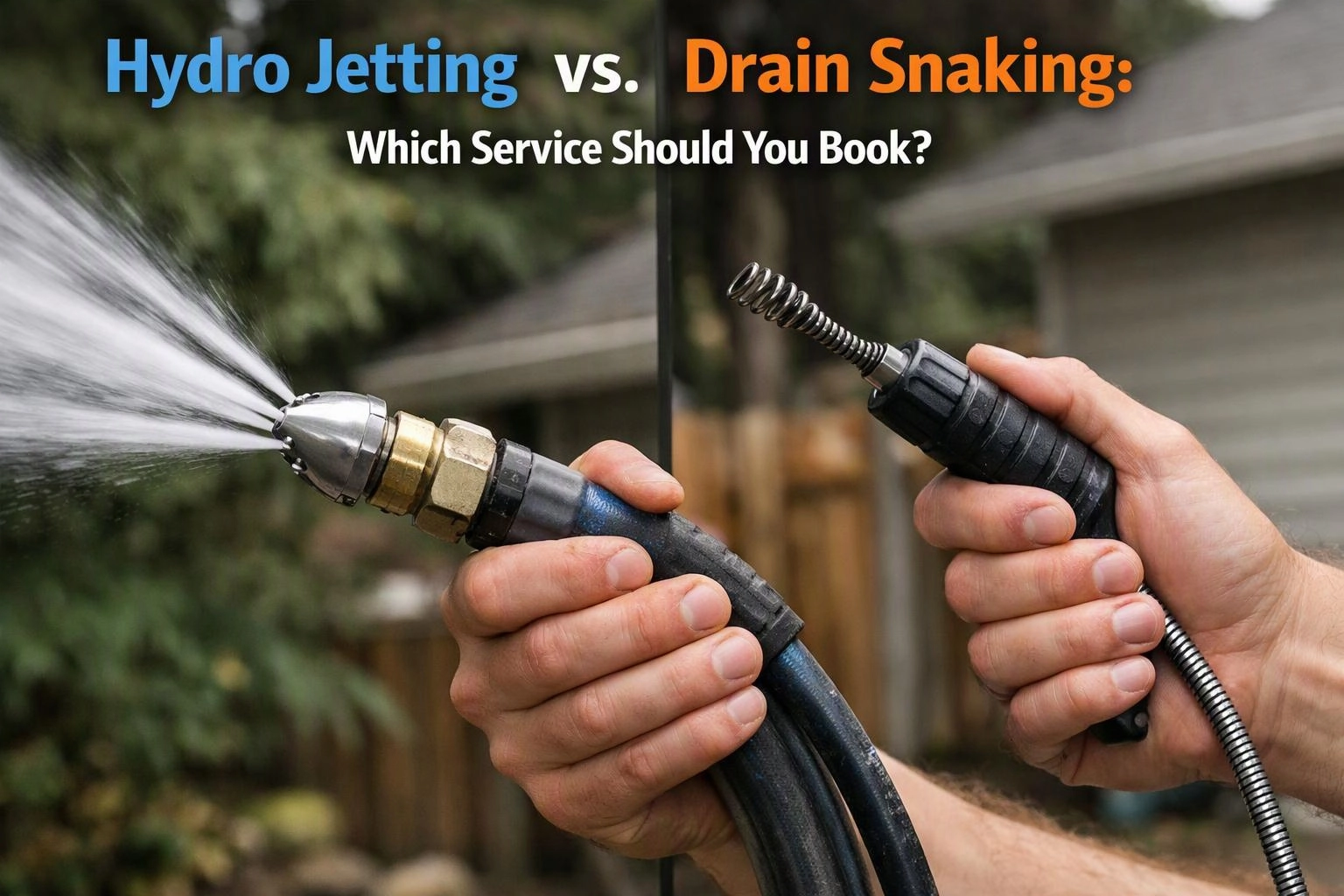
Hydro Jetting vs. Drain Snaking: Which Service Should You Book?
Hydro jetting is usually the stronger choice for heavy buildup and recurring blockages, while drain snaking suits many simple clogs. At PlumbingMaplevalley.link, we check the drain condition first and match the method to the blockage. The decision depends on blockage type, pipe condition, cleaning depth, maintenance needs, and job suitability.
Request an EstimateHydro Jetting vs. Drain Snaking at a Glance
Hydro jetting provides deeper pipe-wall cleaning, while drain snaking usually targets a specific blockage. Both methods can support drain cleaning, but the right choice depends on what caused the problem and how the pipe looks.
- Hydro jetting: Best for heavy buildup, grease, scale, and recurring drain problems.
- Drain snaking: Best for many simple clogs in one blocked fixture.
| Factor | Hydro Jetting | Drain Snaking |
|---|---|---|
| Blockage type | Broad buildup and stubborn obstructions | Localized clogs |
| Pipe condition | Requires suitable pipe condition and access | Often suited to a single blocked fixture |
| Maintenance | Can support deeper preventive cleaning | Usually addresses the immediate blockage |
| Cleaning time | Depends on access, buildup, and line condition | Depends on access and blockage location |
| Cost drivers | Access, pipe length, buildup, inspection, and equipment needs | Access, blockage location, severity, and cleaning scope |
| Best for | Recurring blockages and pipe-wall buildup | Simple clogs in one fixture |
How Drain Snaking Clears a Clog
Drain snaking uses a mechanical cable to break through or retrieve a localized blockage. A drain snake, also called a drain auger, reaches through the drain opening and works on the clog directly.
Our team may use mechanical drain cleaning for a hair clog, soap buildup, or a kitchen drain obstruction. Snaking can restore flow, but it may not remove material that coats the full pipe wall.
For broader drain concerns, our Drain Cleaning service helps us assess the blockage and choose the right cleaning method.
When Drain Snaking Is the Better Fit
Drain snaking is the better fit when one fixture has a simple, localized clog. Our team checks the drain opening and blockage symptoms before choosing the cable and access point.
- Simple drain clog: A single blocked fixture often responds well to mechanical clearing.
- Hair blockage: A drain auger can break up or retrieve hair near the opening.
- Small soft obstructions may be cleared without full pipe-wall cleaning.
- A kitchen drain with a focused blockage may need targeted snaking.
How Hydro Jetting Cleans a Drain or Sewer Line
Hydro jetting uses controlled water pressure to wash buildup from the inside of a drain or sewer line. A jetting nozzle directs water through the drain line and loosens material along the pipe wall.
Our team uses this method when grease, scale, or other deposits restrict the line. Hydro jetting can clean a wider area than a cable, but the pipe must be suitable for the cleaning pressure.
Hydro jet cleaning may apply to a residential drain line or a larger sewer line. We review access and pipe condition before selecting the equipment.
When Hydro Jetting Is the Better Fit
Hydro jetting is the better fit when buildup covers the pipe wall or the blockage keeps returning. Our team looks for the cause before recommending preventive drain cleaning.
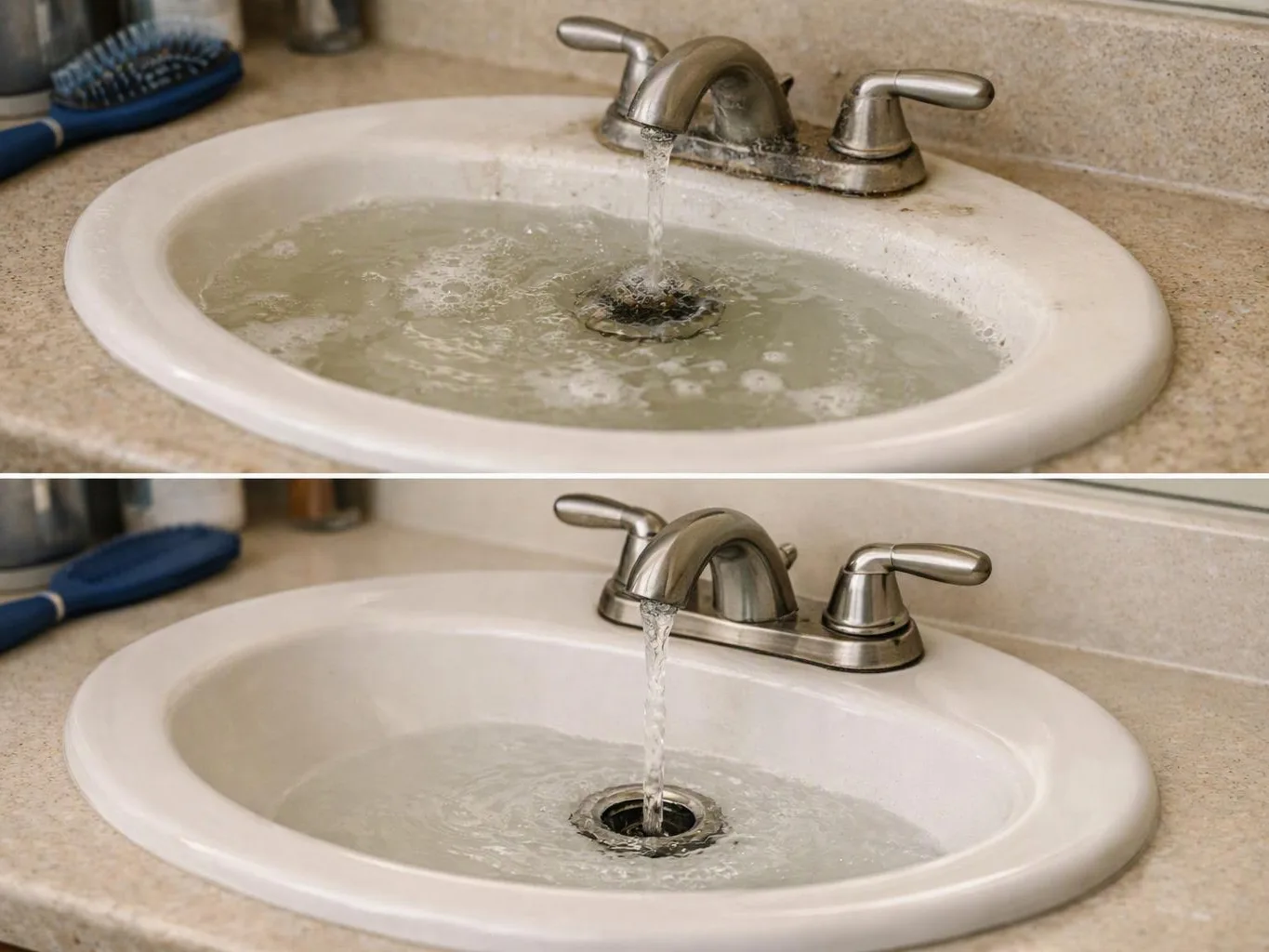
- Recurring drain blockage: Repeated symptoms can point to buildup beyond one small clog.
- Grease buildup: Water jetting can wash greasy deposits from suitable pipe walls.
- Mineral scale: Hydro jetting may help remove deposits that narrow the line.
- Sewer root intrusion needs careful assessment and may require more than cleaning.
- Heavy pipe buildup may call for broader cleaning than a mechanical cable provides.
Is Hydro Jetting Better Than Snaking?
Hydro jetting is better for broad buildup, while drain snaking is better for many isolated clogs. The blockage severity and pipe condition decide which method fits the job.
Recurring clogs may suggest grease, scale, or another restriction along the pipe wall. A drain inspection helps our team separate a simple blockage from a deeper line problem.
Hydro jetting isn’t an automatic upgrade. Snaking may be the more suitable choice when one fixture has a clear, localized clog.
Should the Sewer Line Be Inspected Before Hydro Jetting?
Yes, we should inspect a sewer line when pipe damage or a deep blockage may affect hydro jetting. A sewer camera inspection helps show the pipe condition and blockage location.
Hydro jetting safety depends on matching water pressure and equipment to the sewer pipe. Cleaning won’t repair structural pipe damage, so our team explains the findings before work begins.
What Changes the Cost of Each Drain Cleaning Method?
The cost depends on access, blockage severity, pipe condition, cleaning method, and any inspection needed. Drain access can affect the equipment, labor, and cleaning scope.
Blockage location and pipe length can change the work involved. Heavy buildup or a damaged sewer line may require more assessment than a single fixture clog.
Our quote explains the planned method, access needs, inspection scope, and cleaning work. Request a quote from our team so the price reflects the actual drain condition.
What We Check Before Recommending a Cleaning Method
Our team checks the drain symptoms first, then builds a cleaning plan around the blockage and pipe condition. This process helps prevent an unsuitable cleaning method.
Which Drain Cleaning Service Should You Book?
Book drain snaking for many simple clogs and hydro jetting for recurring or buildup-heavy problems after condition checks. A single fixture clog usually points toward targeted mechanical cleaning.
Recurring blockage symptoms may point toward pipe buildup, grease, mineral scale, or a sewer line concern. Our team checks the blockage location and pipe condition before recommending Drain Cleaning, Hydro Jetting, or Sewer Line Cleaning.
Tell our team what you’re seeing, including slow flow, repeated clogs, or more than one affected fixture. We’ll explain the cleaning scope and prepare a quote based on the actual job.
Questions About Hydro Jetting and Drain Snaking
Can hydro jetting damage old pipes?
Yes, hydro jetting can be unsafe for old or damaged pipes when the pressure and pipe condition don’t match. Our team checks the line before cleaning and looks for cracks, collapse, or other pipe damage.
Can hydro jetting remove tree roots from a sewer line?
Hydro jetting can clear some root growth from a suitable sewer line, but it won’t repair structural damage or prevent roots from returning. Our team uses inspection findings to explain whether cleaning fits the line.
Does drain snaking remove buildup from pipe walls?
Drain snaking usually targets a localized clog and doesn’t fully wash buildup from the pipe walls. Hydro jetting is generally better for broad grease, scale, or other deposits.
What signs show that a drain clog keeps coming back?
Repeated slow drainage, recurring backups, and more than one affected fixture can show that a clog keeps returning. Our team checks the blockage location and pipe condition before choosing a cleaning method.
Can hydro jetting clear a completely blocked drain?
Yes, hydro jetting can clear some completely blocked drains when the pipe is suitable and the blockage allows safe access. Our team may use another method first if the blockage location or pipe condition requires it.
Related Resources
Signs a Drain Clog Is More Than a Single Slow Fixture
Everything About ItWhat a Plumber Can Help With: Common Services and When to Call
Brand vs BrandDrain Cleaning Providers Worth Comparing in Maple Valley (2026)
Brand vs BrandHydro Jetting Companies Worth Comparing in Maple Valley (2026)