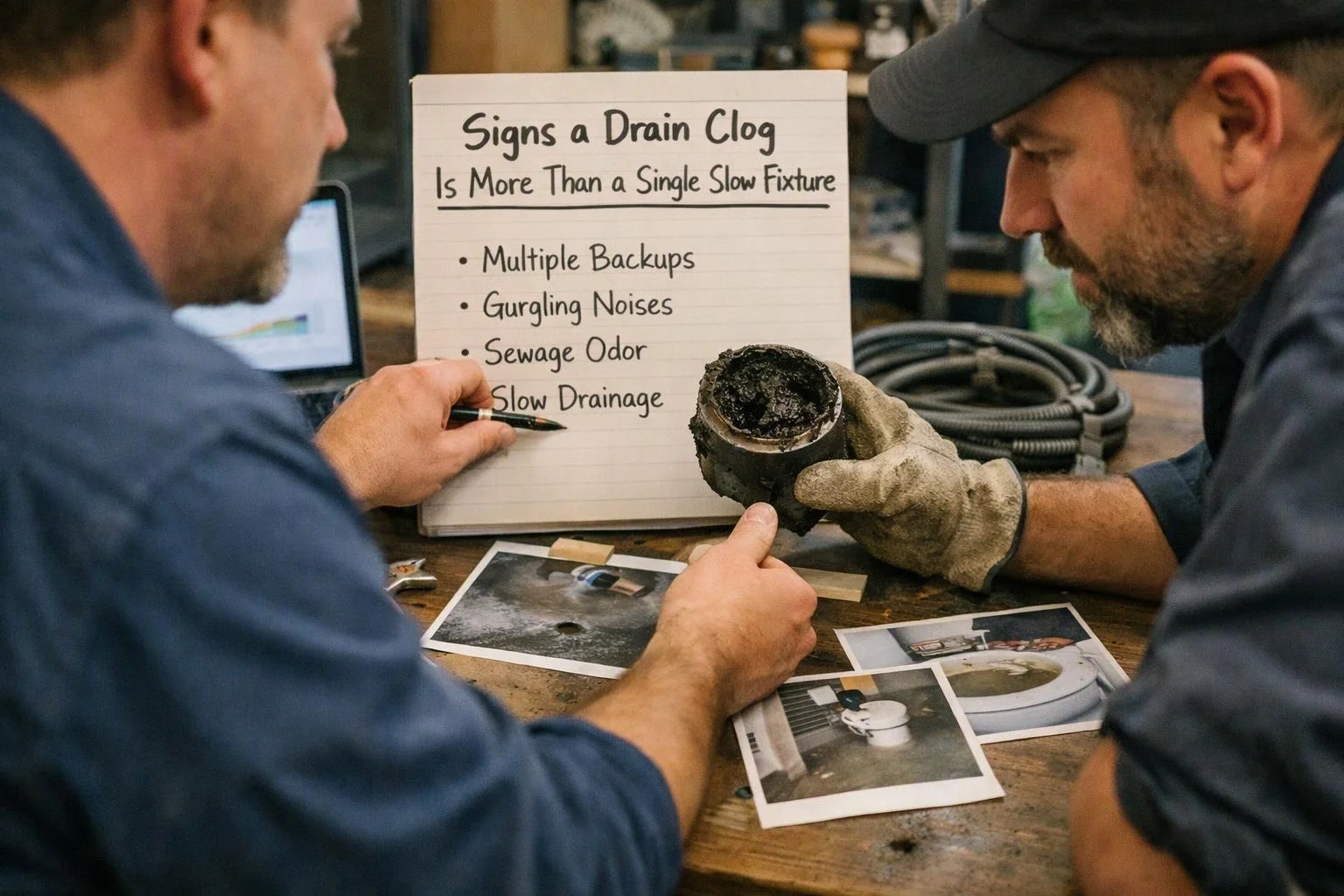
Signs a Drain Clog Is More Than a Single Slow Fixture
Signs of a main drain clog include several slow or backed-up fixtures, gurgling drains, water movement between fixtures, and clogs that return after clearing. At PlumbingMaplevalley.link, we check the drain system to locate the blockage and recommend the right drain cleaning.
Request an EstimateWhen Does a Slow Drain Point to the Main Drain?
A slow drain points to the main drain when several fixtures show problems or wastewater moves between fixtures.
A single fixture clog usually affects one sink, tub, or toilet. A main drain clog affects the shared path that carries wastewater away from several plumbing fixtures.
Watch what happens when another fixture runs. Water rising in a tub when a toilet flushes can point to a blockage farther down the drain system.
Warning Signs of a Main Drain Clog
Multiple warning signs usually point to a shared drain problem, especially when they appear close together. A single slow fixture may have a local clog, but wider symptoms need closer attention.
These signs can occur with a branch line clog, a partial main line blockage, or a sewer line problem. Our team checks the pattern before choosing a cleaning method.
Why Are Several Drains Slow or Backing Up Together?
Several drains become slow or back up together when a blockage affects a shared drain line or the main sewer line.
A branch drain serves fixtures in one area. When that branch drain fills with buildup, nearby fixtures may slow down together.
A blockage in the main sewer line can affect fixtures across the home. Wastewater then has fewer clear paths, so it may move slowly or return through a lower fixture.
Water backing up is more urgent than one slow drain because it can spread wastewater into living areas. Stop using affected fixtures until the source is checked.
For broader service information, see our Drain Cleaning service page.
Why Do Drains Gurgle or Keep Clogging?
Drains gurgle when trapped air moves around a partial blockage, and repeated clogs can signal buildup or a damaged drain line.
A gurgling drain may indicate that wastewater and air can't move freely. The sound can come from a partial blockage in a branch drain or a larger shared line.
Pipe buildup can narrow the opening over time. Root intrusion can also interfere with flow when roots enter a damaged sewer line.
When a clog keeps coming back after clearing, the first opening may not be the full problem. Our team looks for the cause, including pipe condition and blockage location.
DIY Checks vs. Calling Us for a Main Drain Clog
You can safely check simple fixture symptoms, but a main drain blockage needs a broader review. The right choice depends on how many fixtures are affected and whether wastewater is backing up.
A chemical drain cleaner can damage some pipes and won't confirm where a shared blockage sits. Don't mix drain chemicals or use them when wastewater may contact your skin.
| Factor | What you can do yourself | What we do |
|---|---|---|
| One slow fixture | Try a plunger over the drain opening when no wastewater is present. | We assess the fixture and check whether the clog is local. |
| Multiple drains slow together | Limit fixture use and note which fixtures are affected. | We trace the shared drain line and look for a main drain blockage. |
| Water backup or sewage odor | Avoid contact with wastewater and keep people away from the area. | We identify the affected line and plan safe drain cleaning. |
| Recurring clog | Record when the clog returns and which fixtures are involved. | We may use mechanical drain cleaning and camera inspection to assess the line. |
A plunger can help with a simple fixture clog, but it may not reach a blockage in the main drain. Stop DIY attempts when several fixtures are involved or wastewater returns.
How We Confirm the Source of the Blockage
We confirm the blockage by reviewing affected fixtures, checking accessible drain points, and selecting a drain cleaning method for the line.
Our team starts with the symptoms and the order in which they appeared. We check an accessible cleanout when the plumbing layout provides one.
We then consider the blockage location, pipe condition, and signs of a branch line clog. A camera inspection can help show buildup, root intrusion, or damage inside the drain pipe.
Once we understand the problem, we match the cleaning method to the line. We explain what the inspection shows and what the recommended work addresses.
What Should You Do When Several Drains Back Up?
Stop using affected fixtures and contact our team when wastewater backs up through several drains or returns after clearing.
Keep people and pets away from wastewater. Avoid running water, flushing toilets, or using appliances that discharge into the drain system.
Use the water shutoff only when you need to prevent more water from entering the plumbing system. A shutoff won't remove the blockage, so arrange drain cleaning when the backup continues.
Our team can review the symptoms, inspect accessible drain points, and identify the next safe step. Cleanup may also be needed if wastewater reaches floors or other surfaces.
Questions About Main Drain Clog Signs
Can a main drain clog affect every drain in the house?
Yes, a main drain clog can affect many fixtures connected to the same sewer line. The exact pattern depends on the home’s drain layout and where the blockage sits.
Can a plunger clear a main drain clog?
A plunger may clear a simple fixture clog, but it usually won't confirm or reach a blockage in the main drain. Several affected fixtures call for a drain inspection.
Why does my toilet gurgle when the sink drains?
A toilet can gurgle when air moves around a partial blockage in a shared drain line. The sink and toilet may be competing for a clear path through the drain system.
Why does my drain clog keep coming back after I clear it?
A recurring clog can result from pipe buildup, root intrusion, or a damaged drain line. Our team uses the fixture pattern and inspection findings to look beyond the first opening.
Related Resources
What a Plumber Can Help With: Common Services and When to Call
Compared ToHydro Jetting vs. Drain Snaking: Which Service Should You Book?
Compared ToSewer Camera Inspection vs. Cleaning: What to Book Before Approving Work
Compared ToStorm Drain Cleaning vs. Sewer Line Cleaning: Book the Right Service