What Whole-Home Low Water Pressure May Mean
Low water pressure throughout the house usually points to a shared supply, pressure-control, valve, pipe, or leak problem. At PlumbingMaplevalley.link, we help trace the cause and match the repair to the affected water system.
Request an EstimateWhat Does Low Water Pressure Throughout the House Mean?
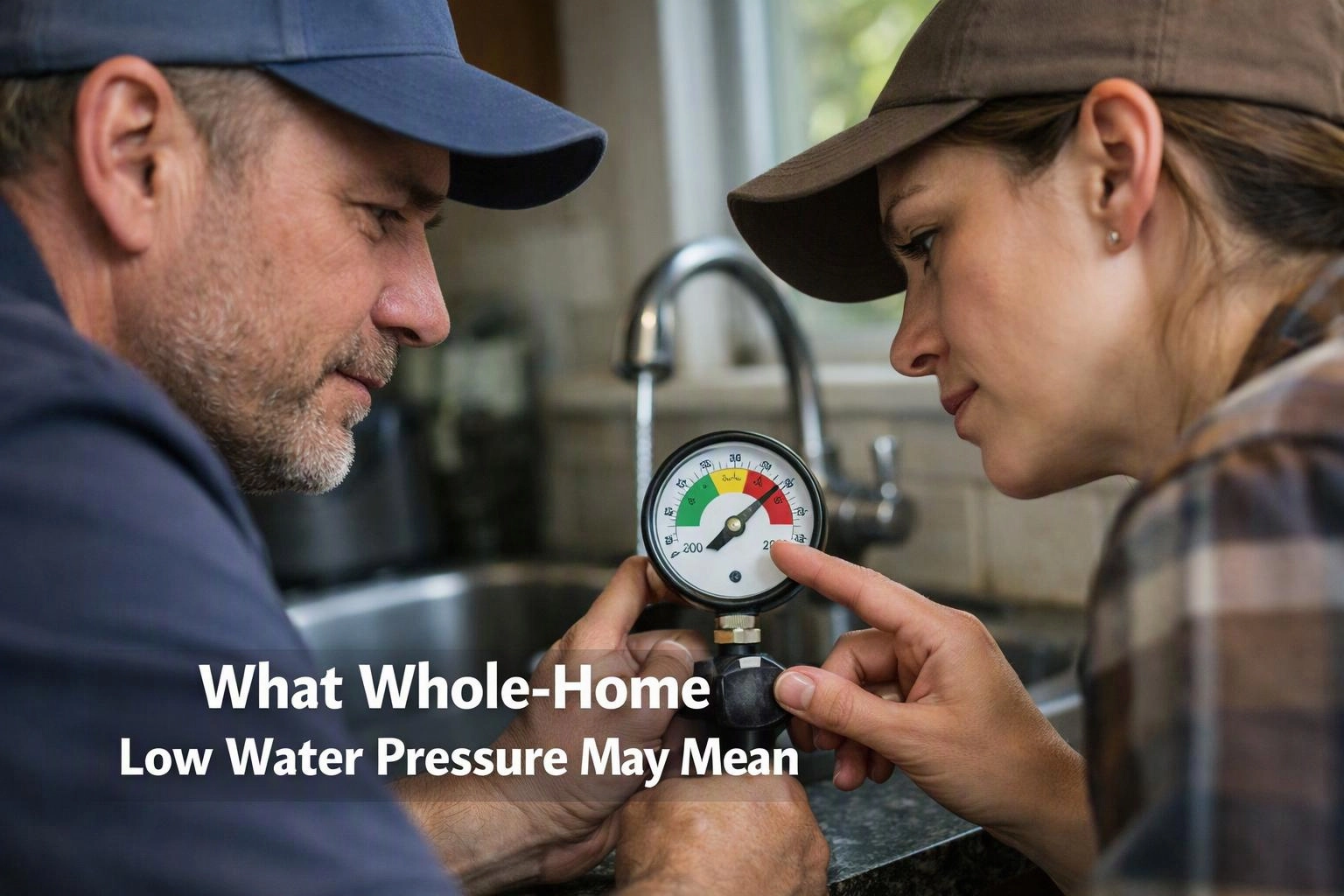
Whole-home water pressure means the force moving water through several fixtures. Low pressure throughout the house means multiple fixtures receive weak flow, which usually points to a shared part of the plumbing system.
A problem with the water supply, main valve, pressure control, or water line can affect faucets, showers, toilets, and appliances together. Testing the pattern helps separate a house-wide issue from one clogged fixture.
What Signs Point to a Whole-Home Pressure Problem?
Whole-home pressure problems show up when several fixtures lose flow at the same time. The pattern can affect hot water, cold water, or both.
What Causes Low Water Pressure at Every Faucet?
Low water pressure at all faucets usually comes from a shared supply component or restriction. We check the most accessible causes first and then trace the water line if needed.
How Can a Leak Affect Whole-Home Water Pressure?
Yes, a leak can lower water pressure when escaping water reduces flow available to fixtures. A leak may occur in a water service line, an interior pipe, or another shared section of the system.
Unexplained water use, damp soil, wet walls, noisy pipes, or water damage can support a leak diagnosis. Our team uses water leak detection to trace hidden flow loss before recommending water line repair or another fix.
Why Is Hot Water Pressure Lower Than Cold Water Pressure?
Hot water pressure that is lower than cold water pressure usually points to a restriction in the water heater or hot-water piping.
Possible causes include a restricted water heater inlet valve, sediment buildup, or scale inside hot water pipes. When cold water flow remains stronger, the problem usually sits on the hot-water side instead of the whole supply.
Our team checks the water heater and connected piping to locate the hot water restriction safely.
How We Diagnose Low Water Pressure Throughout a House
We diagnose whole-home pressure loss by testing the supply, isolating affected sections, and checking shared valves and lines. Our process helps connect the pressure symptoms to the correct repair.
Which Repair Fits the Cause of Low Water Pressure?
The right water pressure repair depends on where flow becomes restricted or lost. We match the work to the tested cause and explain what the repair includes before work begins.
| Likely cause | Matching repair approach |
|---|---|
| Partially closed or damaged shutoff valve | Inspect, adjust, or replace the valve as needed. |
| Pressure-reducing valve failure | Test the pressure control and repair or replace the failed component. |
| Restricted or damaged water line | Trace the affected section and plan water line repair. |
| Hidden water leak | Locate the leak, stop the water loss, and repair the damaged pipe or line. |
| Pipe restriction from corrosion or scale | Assess the restricted section and determine whether repair or replacement fits the system. |
For a system-wide issue, our Water Pressure Repair service starts with testing and cause tracing. The final quote depends on access, the failed component, pipe condition, and the repair scope.
What Can Prevent Low Water Pressure Problems?
Plumbing maintenance can help reveal restrictions and leaks before they affect the whole house. Prevention focuses on valves, water-using equipment, and changes in flow.
When Should You Schedule Water Pressure Repair?
Schedule water pressure repair when low flow affects several fixtures, appears suddenly, or occurs with leak warning signs.
Persistent low water pressure can point to a valve, supply line, restriction, or hidden leak. Sudden pressure loss deserves prompt attention, especially when you notice damp soil, water damage, unusual sounds, or unexplained water use.
Our team can test the system and explain whether water pressure repair, water line repair, or leak detection fits the problem.
Questions About Whole-Home Water Pressure
Can a partially closed main shutoff valve lower water pressure?
Yes, a partially closed main shutoff valve can lower water pressure throughout the house. Our team checks the valve for position, damage, and restricted flow before recommending repair.
Can old pipes cause low water pressure throughout a house?
Yes, old pipes can cause low water pressure when corrosion or scale narrows the passage for water. We inspect the affected water line and connect the pipe condition to the pressure symptoms.
What should I do if the water pressure drops suddenly?
Sudden water pressure loss calls for checking whether several fixtures are affected and whether leak warning signs are present. If the pressure stays low, our team can perform a water pressure test and check the shared valves, water line, and possible leak.
Related Resources
Water Line Repair vs. Replacement: How to Compare the Work and Quotes
Compared ToWhole-House Repiping vs. Spot Repair: Which Project Should You Hire For?
Compared ToLeak Detection vs. Leak Repair: What to Include in Your Plumbing Quote
When You Need ItHow to Spot a Hidden Water Leak in Your Home