Signs Your Sump Pump May Be Failing
Signs of sump pump failure include strange noises, constant running, repeated cycling, poor water removal, and failure to start. PlumbingMaplevalley.link checks the pump, power, float, discharge line, and pit to identify the repair or installation need.
Request an EstimateWhat Are the Warning Signs of Sump Pump Failure?
A sump pump can show failure through unusual sounds, constant operation, repeated cycling, weak discharge, or no start. These signs can point to a problem with the pump motor, float switch, discharge pipe, check valve, or sump pit.
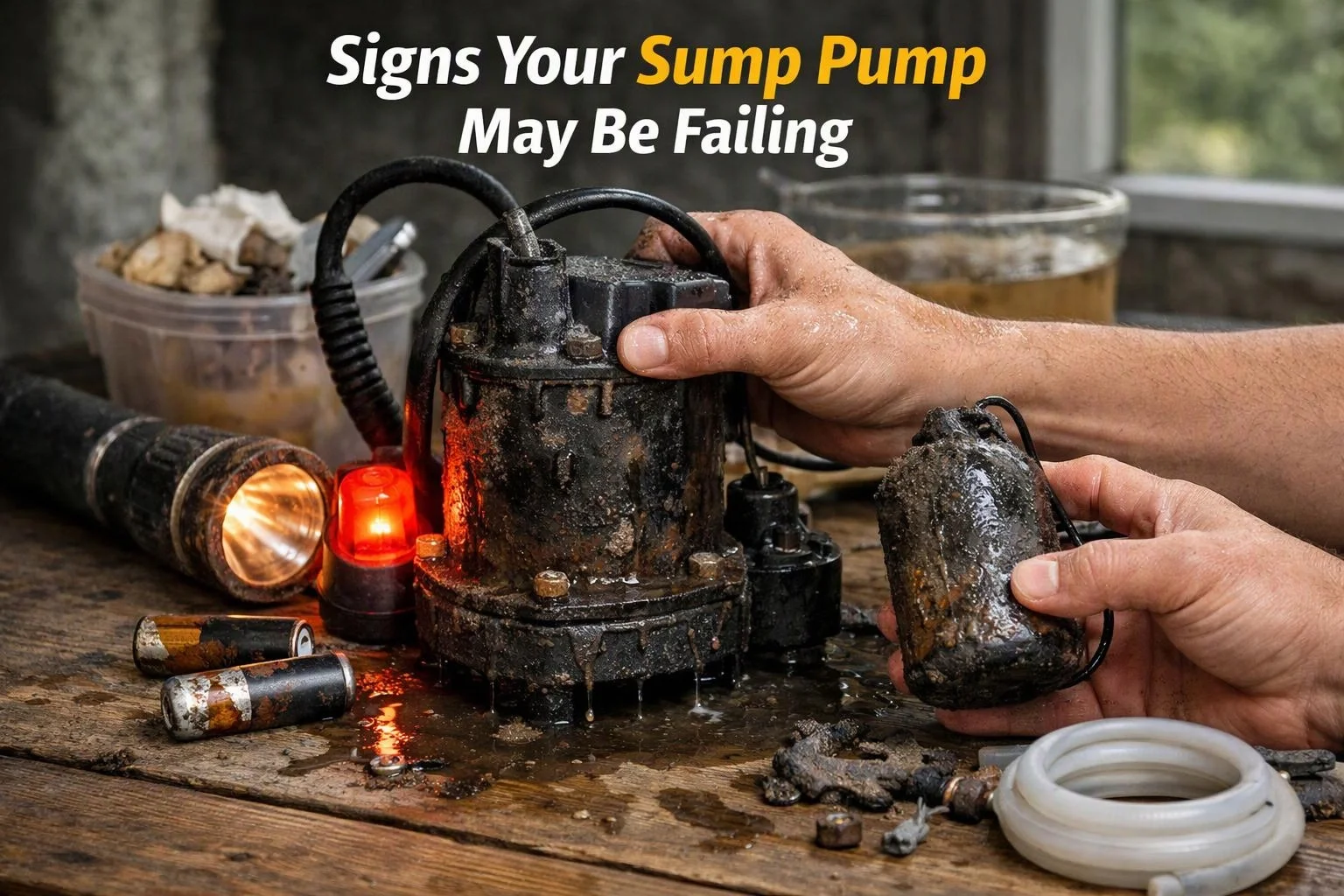
Water in the sump pit can rise quickly when the pump cannot keep up. We inspect the full water removal system so the visible symptom does not hide a deeper fault.
Why Is the Sump Pump Running Constantly?
A sump pump may run constantly when water keeps entering the pit, the float stays raised, or the discharge system cannot move water away.
High water inflow can come from groundwater, drainage conditions, or heavy moisture around the foundation. A float switch that stays up can also keep continuous pump operation active.
We check the discharge line and pump capacity when the pump never rests. A blocked outlet, poor pipe routing, or undersized equipment can leave the pump running without providing strong basement water protection.
Why Does the Sump Pump Keep Turning On and Off?
A sump pump that turns on and off repeatedly may have a float problem, a small pit, a faulty check valve, or changing water flow.
Short cycling can happen when the sump pit fills and drains too quickly. A float switch may also catch on the pit or nearby piping.
We examine the check valve and discharge path because water can flow back into the pit after the pump stops. Repeated cycling can increase wear on the pump motor and may leave the system less reliable during heavy rain.
What Do Strange Sump Pump Noises Mean?
Strange sump pump noises can point to vibration, a loose discharge pipe, debris near the impeller, or motor wear.
Grinding or scraping may suggest an impeller problem or debris inside the pump. Rattling can come from a loose connection or discharge pipe.
Our team checks the sump pump motor, impeller, bearings, and pipe connections. We listen for changes during operation and look for movement that could damage the equipment.
What Can You Check Yourself, and What Do We Repair?
You can observe basic symptoms and check accessible controls, while we handle pump, plumbing, and electrical fault diagnosis safely. Do not open electrical components or alter wiring if you are not qualified.
The table shows where safe observation ends and professional diagnosis begins. Electrical connections and pump controls require careful testing to avoid shock or equipment damage.
| Factor | What you can do yourself | What we do |
|---|---|---|
| Power outlet and circuit breaker | Look for an obvious power interruption and note whether the breaker has tripped. | We test the electrical supply and inspect safe connections. |
| Sump pit and float switch | Observe whether the float moves freely without reaching into unsafe water. | We test the switch and check for obstructions or poor positioning. |
| Pump motor | Listen for unusual noise and note whether the pump starts. | We assess motor operation, impeller movement, and signs of wear. |
| Discharge line and electrical connections | Look for visible leaks, loose piping, or weak water flow at the outlet. | We diagnose blockages, valve faults, pipe issues, and electrical problems. |
Stop observing if water reaches electrical equipment or the area becomes unsafe. Our team can continue with controlled testing and explain the repair need.
Why Won't the Sump Pump Turn On?
A sump pump may not turn on because power is interrupted, the float is stuck, the switch has failed, or the motor has stopped working.
Start by observing the outlet and circuit breaker without opening electrical components. A backup pump may also fail to start if its power supply, float, or battery system has a fault.
We test the power supply, outlet, float switch, and pump motor. Our team can identify whether the problem is an electrical fault, a control failure, or a failed pump.
How We Diagnose a Failing Sump Pump
We diagnose sump pump failure by checking the pump, power, float, pit, discharge path, and related controls before recommending repair or installation.
Our sump pump inspection begins with the symptoms you noticed. We then test the float switch, review pump motor operation, and inspect the discharge pipe and check valve.
We also check the sump pit for obstructions, poor float movement, and water flow problems. When repair is suitable, we explain the fault and the work involved; when the equipment cannot provide reliable protection, we discuss Sump Pump Repair or Sump Pump Installation based on the system need.
When Does a Sump Pump Need Repair or Replacement?
Sump pump repair fits a targeted fault, while replacement or installation may suit severe motor damage, repeated failure, or poor system capacity.
A repair may address a stuck float switch, blocked discharge, loose pipe, or check valve failure. Replacement becomes more suitable when the pump motor has failed or the system cannot remove water reliably.
Our team considers pump age, failure patterns, pit conditions, discharge design, and basement water protection needs. We explain what the quote covers so you can choose the repair or replacement path with clear information.
Questions About Failing Sump Pumps
Can a sump pump fail without warning?
Yes, a sump pump can fail without an obvious warning when its motor, switch, power supply, or internal parts stop working. Regular observation can reveal noise, cycling, or water-level changes before a complete breakdown.
Can a sump pump run but still fail to remove water?
Yes, a sump pump can run while poor water removal continues. A blocked discharge line, faulty check valve, damaged impeller, or limited pump capacity can prevent effective drainage.
What should I do if my sump pump stops during heavy rain?
If your sump pump stops during heavy rain, check for an obvious power interruption without opening electrical components. Keep away from standing water near electrical equipment and contact our team for safe diagnosis.