Water Leak Detection: Signs, Tools, and Next Steps
Water leak detection methods combine visible signs, water-use checks, pressure testing, acoustic tools, thermal imaging, and cameras to locate leaks. At PlumbingMaplevalley.link, we use the findings to guide safe water leak repair or burst pipe repair.
Request an EstimateWhat Are the Signs of a Hidden Water Leak?
Hidden water leaks often show through damp spots, stains, musty odors, warped materials, unusual sounds, or unexplained water use.
A hidden water leak can cause water damage before you see a steady drip. Look for a water stain, damp spot, peeling finish, or mold near walls, ceilings, floors, and cabinets.
A musty or damp odor may point to trapped moisture. You may also hear running water when fixtures are off, or see the water meter move during a period with no water use.
Unexplained water use can support the signs found during a plumbing inspection. We compare the visible evidence with the plumbing system to narrow down the leak source.
Which Water Leak Detection Methods Work Best?
The best water leak detection method depends on the leak's location, pipe type, access, and the signs found during inspection.
Our team starts with the least disruptive checks and adds tools when the evidence calls for them. Each method answers a different question about the leak source.
| Method | What it shows | Common use |
|---|---|---|
| Visual inspection | Visible stains, damp areas, damaged materials, and fixture leaks | First review of accessible areas |
| Water meter check | Possible water flow when fixtures are not running | Checking for ongoing water use |
| Pressure testing | Whether an isolated pipe section holds pressure | Testing hidden supply lines |
| Acoustic leak detection | Sound created by pressurized water escaping | Narrowing a concealed leak location |
| Thermal imaging | Temperature changes linked to water movement | Reviewing walls, floors, and ceilings |
| Moisture meter | Moisture readings inside or near building materials | Checking the spread of water damage |
| Camera inspection | Interior views of accessible pipe sections | Reviewing pipe condition and blockages |
Tools can support one another, but no single test fits every plumbing system. We choose the method that gives useful evidence without creating unnecessary access points.
How Does Pressure Testing Help Locate a Water Leak?
Pressure testing helps locate a water leak by showing whether an isolated plumbing section can hold pressure.
Our team separates the suspected pipe section from the rest of the plumbing system. We then observe whether pressure loss occurs during the test.
Pressure loss can confirm that water is escaping from the tested section. We use that result with visible signs, the pipe route, and other readings to narrow the hidden leak.
Pressure testing doesn't always identify the exact opening by itself. Acoustic leak detection, moisture readings, or camera inspection may help complete the inspection.
How Do We Detect a Leak Under a Concrete Slab?
We detect a leak under a concrete slab by combining pressure results, sound signals, temperature changes, and pipe-route information.
A slab leak can develop below a concrete slab or near the foundation. Signs may include a warm spot, damp flooring, moving water sounds, or pressure loss in a supply line.
We begin with a pressure test to check the suspected line. We then use an acoustic signal and temperature change to narrow the area.
The pipe route helps us compare test results with the likely path beneath the slab. This process supports a focused access point when further inspection or repair is needed.
What Tools Are Used for Water Leak Detection?
Water leak detection uses several tools because each tool reveals a different part of the problem. Our team selects tools based on the suspected leak source and the available access.
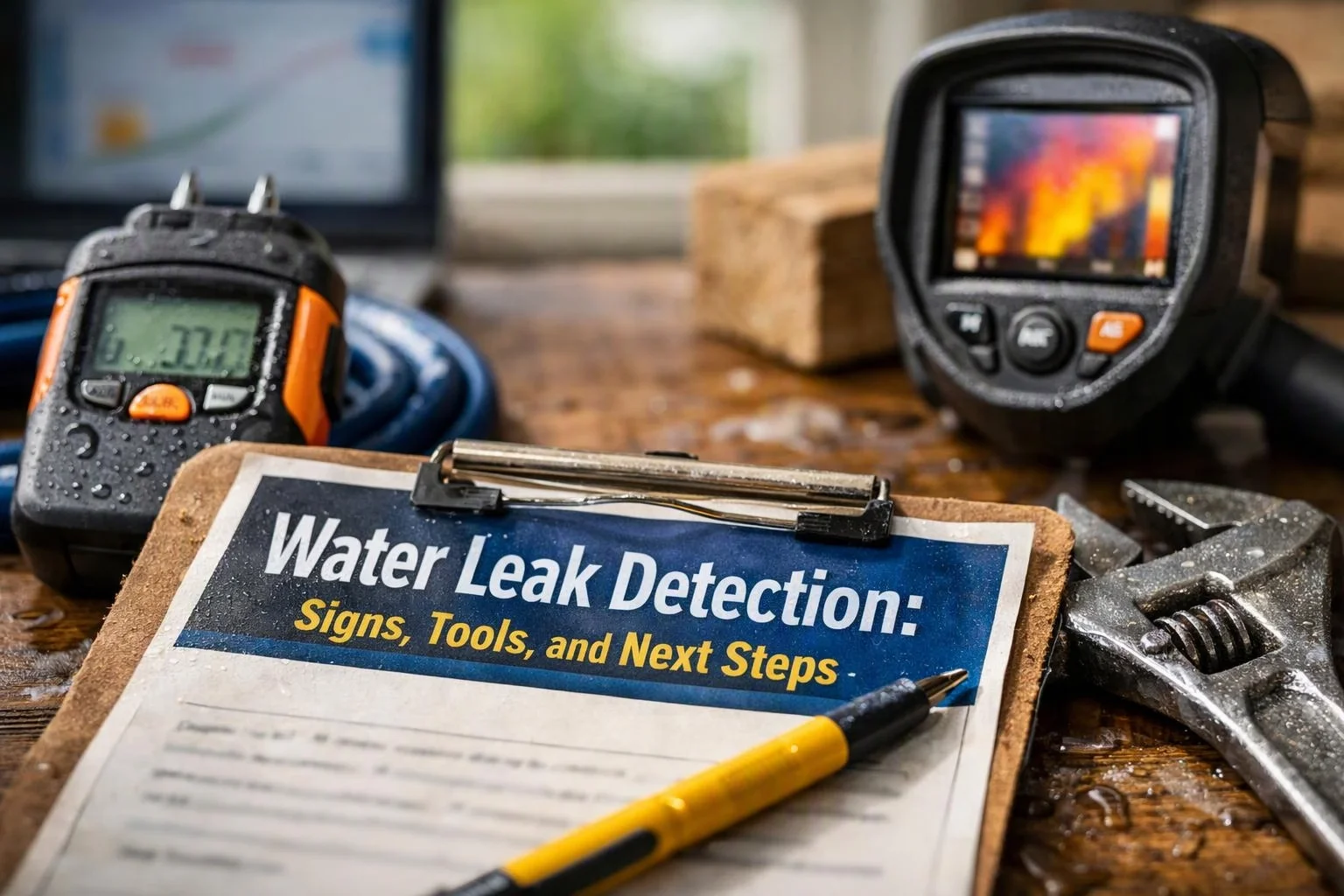
Tool readings need context because building materials and pipe types affect the results. We compare the readings with the water meter, visible signs, and plumbing layout.
What Should You Do When You Suspect a Water Leak?
When you suspect a water leak, protect people and property first, then arrange a leak inspection.
Don't enter unsafe areas or open walls and floors to search for hidden plumbing. Our team can assess the leak source and choose a controlled inspection method.
How We Turn Leak Detection Results Into a Repair Plan
We use the confirmed leak source, pipe condition, access needs, and damage risk to explain the repair plan and prepare a quote.
Our team first reviews whether the issue involves a water supply line, drain line, pipe joint, or another part of the plumbing system. We then consider the pipe route and the safest access point.
Water leak repair may involve opening a limited area, replacing a damaged section, or addressing a failed connection. Burst pipe repair may require faster isolation and a broader review of nearby materials.
We explain the repair scope before work begins. The quote reflects the confirmed findings, required access, repair materials, and related water damage risks.
For an overview of our approach, see our Water Leak Detection service page.
When Should You Stop Checking and Call for Water Leak Detection?
Call for water leak detection when water damage is spreading, the leak source stays hidden, or reaching the plumbing could be unsafe.
An active leak can worsen quickly when the main water shutoff isn't accessible or the pipe cannot be isolated. A burst pipe also needs prompt attention because continued flow can affect walls, floors, cabinets, and nearby electrical systems.
Stop checking when hidden plumbing lies behind finished surfaces or when access requires cutting, lifting, or entering an unsafe area. Our team can use leak locating methods that match the signs and the plumbing layout.
Questions About Water Leak Detection
Can water leak detection find a leak without visible damage?
Yes, water leak detection can find some leaks before visible damage appears. Pressure testing, acoustic signals, thermal imaging, and moisture readings can reveal hidden water movement.
Can a water meter help confirm a hidden plumbing leak?
Yes, a water meter can help confirm a hidden plumbing leak when water use continues with fixtures turned off. Our team compares that result with pressure testing and other inspection findings.
Does water leak detection damage walls or floors?
Water leak detection doesn't always damage walls or floors because many tests use external readings and existing access points. If an access point becomes necessary, our team uses the inspection evidence to keep the opening focused.
What happens after a hidden water leak is located?
After a hidden water leak is located, our team reviews the pipe condition, access point, damage risk, and repair scope. We then explain the water leak repair or burst pipe repair plan and prepare a quote.
Related Resources
Emergency Plumber vs. Standard Appointment: What to Compare Before You Book
Compared ToWhole-House Repiping vs. Spot Repair: Which Project Should You Hire For?
Compared ToLeak Detection vs. Leak Repair: What to Include in Your Plumbing Quote
When You Need ItHow to Spot a Hidden Water Leak in Your Home