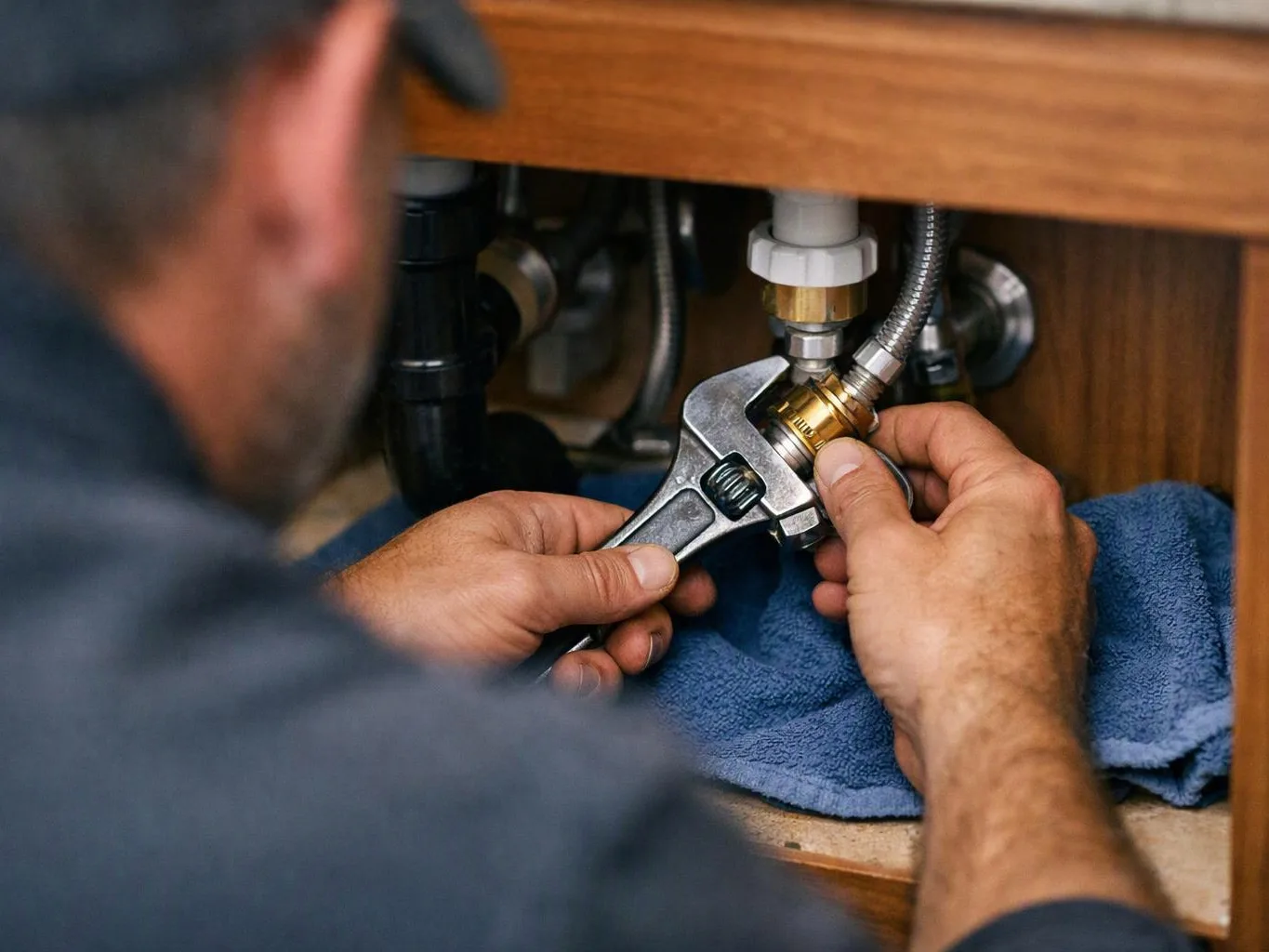
Garbage Disposal Problems: Humming, Leaks, and Poor Drainage
Garbage disposal problems usually come from a jammed motor, worn seal, blocked drain, loose connection, or damaged unit. At PlumbingMaplevalley.link, we check the disposal, drain path, plumbing connections, and electrical safety before explaining the repair.
Request an EstimateWhat Signs Point to a Garbage Disposal Problem?
Garbage disposal problems often show up through changes in sound, drainage, or water flow. These signs can point to a mechanical, plumbing, drainage, or electrical fault.
Stop using the unit when water reaches electrical parts or the sink fills quickly. Our team can separate a disposal fault from a wider drain blockage.
Why Is the Garbage Disposal Humming but Not Working?
A humming garbage disposal usually has power but a motor or grinding part that can't turn. We inspect the unit safely and check whether the fault comes from a jam, motor damage, or an electrical connection.
The electric motor may be stalled by a jammed disposal or a blocked impeller. A foreign object can also stop the grinding parts while power remains available.
We check the reset button and circuit breaker as part of electrical safety. A tripped reset button may protect the unit, but repeated trips can point to motor failure or another fault.
What Causes a Garbage Disposal to Leak?
A leaking garbage disposal usually has a failed seal, loose connection, cracked housing, or damaged drain fitting. We trace the water to its source before deciding whether to reseal, reconnect, or replace a part.
Water near the top often comes from the sink flange or mounting assembly. Water below the unit may come from the drain elbow, rubber gasket, or dishwasher inlet.
A dishwasher connection can leak when its fitting or clamp loosens. We also check the plumbing connection because water can travel along the cabinet and appear far from the source.
Why Won't the Garbage Disposal Drain?
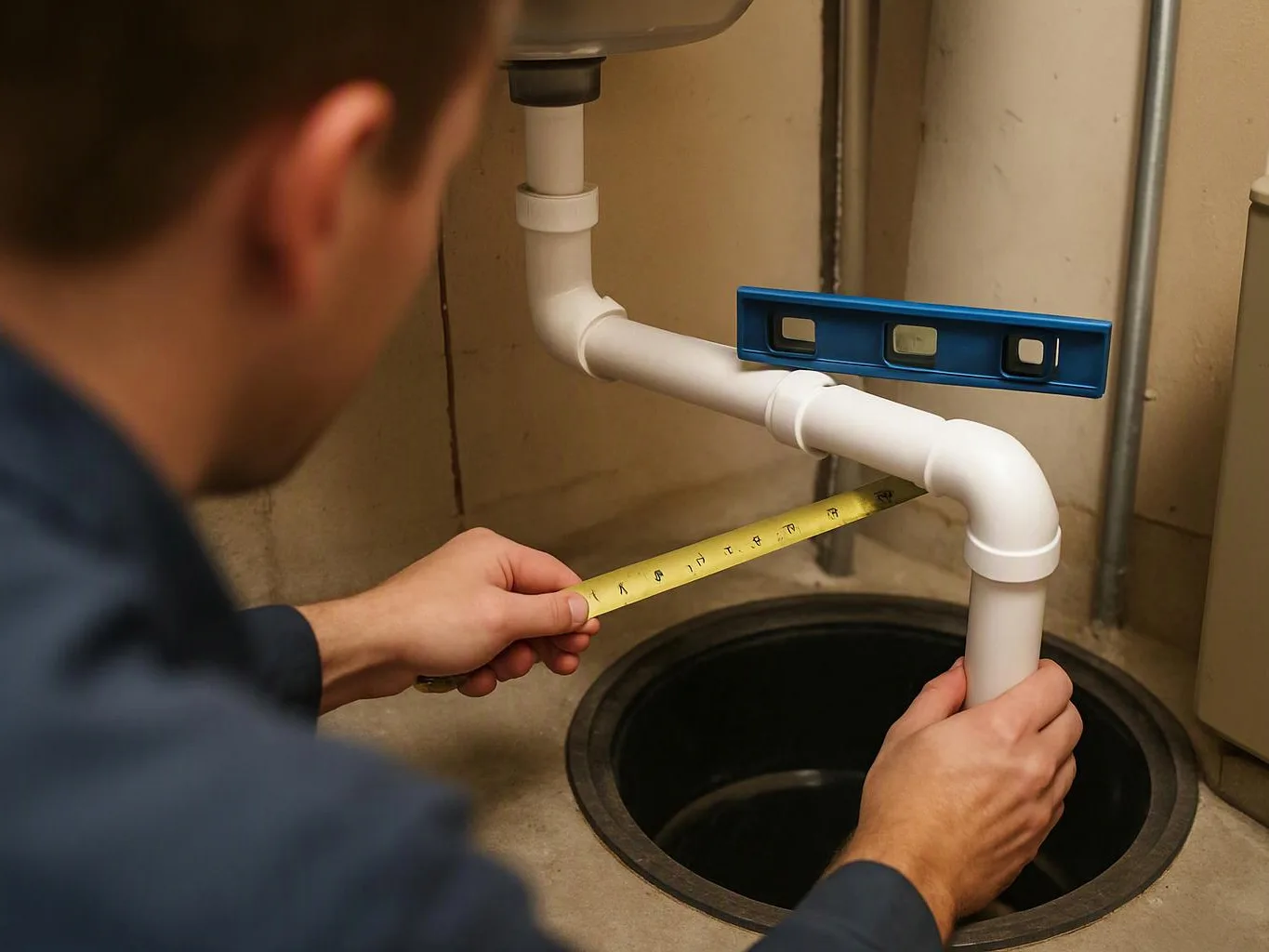
A garbage disposal that won't drain usually has a blockage in the disposal outlet, drain fitting, P-trap, or connected drain line. We check the full drainage path because clearing the disposal alone may not remove the restriction.
Food debris can collect near the drain elbow and restrict flow. A deeper drain blockage can cause a sink backup, slow drain, or standing water.
Our team checks the disposal outlet, P-trap, and drain line in a safe order. Drain cleaning may be needed when the restriction extends beyond the disposal.
What Causes Strange Garbage Disposal Noises?
Strange disposal noises usually come from an object, worn internal part, or loose mounting component. The sound can help narrow the fault, but the unit still needs a safe inspection.
Turn off the power when a disposal makes a grinding noise. Don't reach into the opening because hidden objects can move unexpectedly.
What Commonly Causes Garbage Disposal Problems?
Common disposal causes include internal jams, worn parts, drain restrictions, and connection failures. Finding the cause helps us choose repair or replacement with less guesswork.
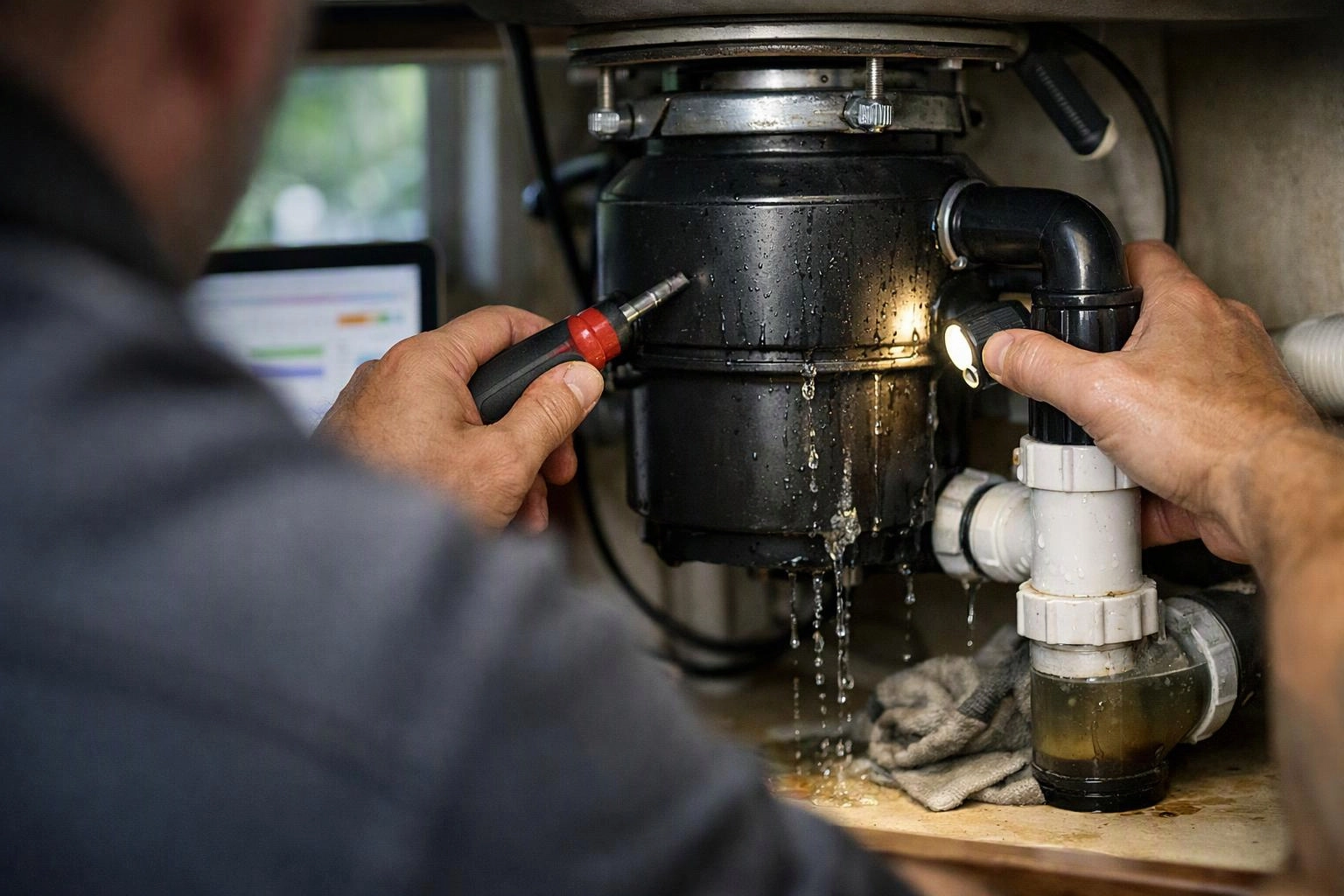
Several faults can happen at the same time. We test the unit and inspect connected plumbing before recommending a repair.
How We Diagnose and Repair Disposal Problems
We diagnose garbage disposal problems by checking the unit, connections, drain path, and power supply in a safe order. Our team explains the needed repair and what the quote covers.
Our team may recommend garbage disposal repair when a serviceable part or connection has failed. We also explain when drain cleaning or a replacement unit makes better sense.
When Does a Garbage Disposal Need Repair or Replacement?
A garbage disposal needs repair when the main unit remains sound and the fault involves a serviceable part or connection. Replacement becomes more practical when the housing, motor, or mounting system has serious damage.
We consider the motor condition, leak source, housing, and mounting assembly during the repair decision. We also check unit compatibility before selecting a replacement.
A seal replacement or plumbing repair may solve a leaking disposal with a sound housing. A damaged motor or cracked housing can make replacement the clearer choice.
How Can You Prevent Garbage Disposal Problems?
Disposal maintenance helps reduce jams, odors, leaks, and drain blockages. Good use habits also reduce stress on the motor and grinding parts.
These habits can't prevent every failure. A worn seal, loose connection, or motor problem still needs a proper inspection.
What Should You Do Before Garbage Disposal Repair?
Turn off the disposal and avoid reaching into the opening when the unit hums, leaks, or makes a strange noise. PlumbingMaplevalley.link should handle electrical checks, jammed internal parts, hidden leaks, and blocked plumbing.
Use the power switch and circuit breaker to stop operation when you see a leak or standing water. Don't use the disposal when water could reach wiring or other electrical parts.
Keep clear of the sink opening and don't force the motor to run. Our team can assess the electrical hazard, leak control needs, and drain condition safely.
Related Resources
Signs a Drain Clog Is More Than a Single Slow Fixture
Everything About ItWhat a Plumber Can Help With: Common Services and When to Call
Compared ToHydro Jetting vs. Drain Snaking: Which Service Should You Book?
Compared ToSewer Camera Inspection vs. Cleaning: What to Book Before Approving Work